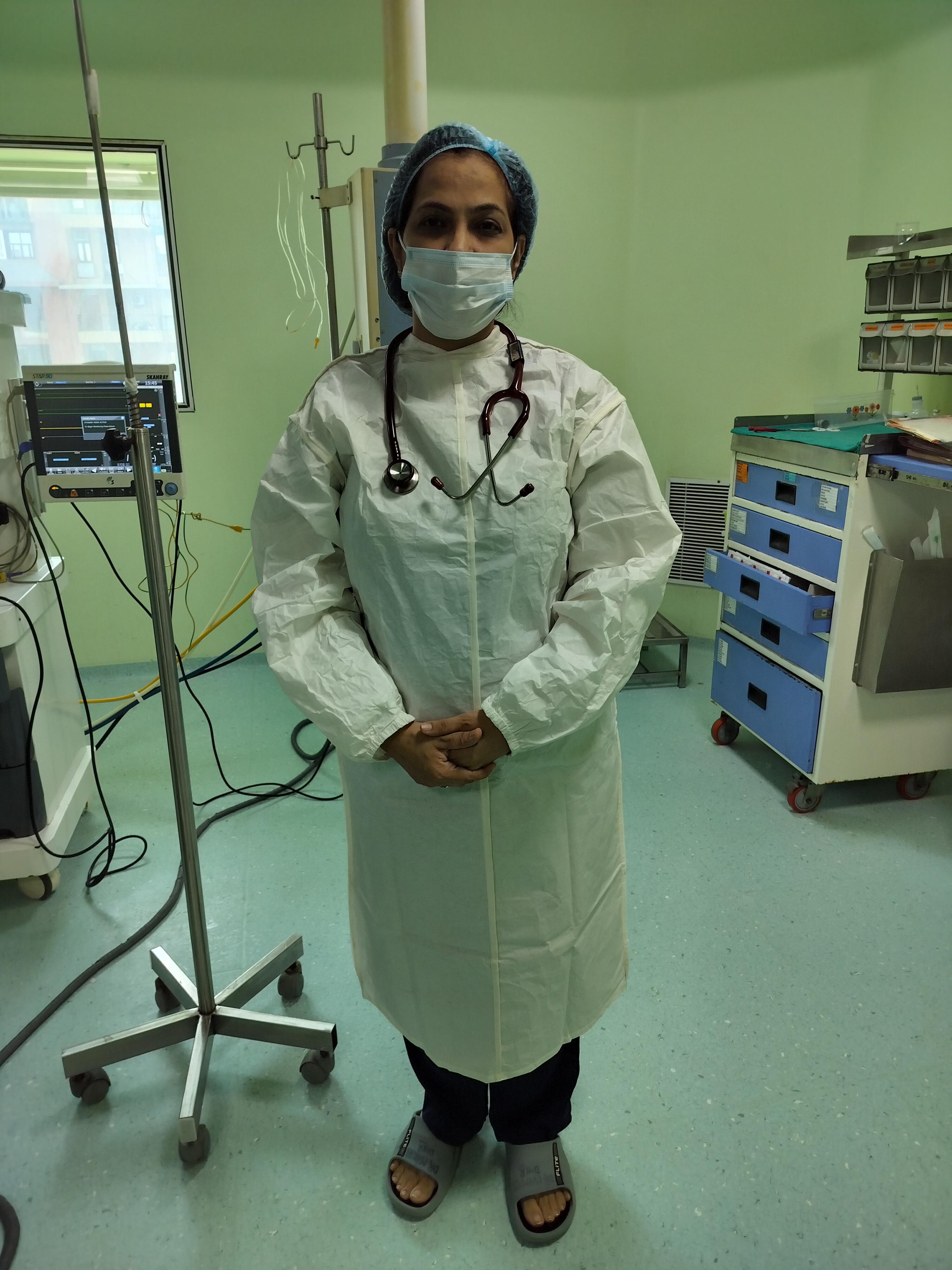
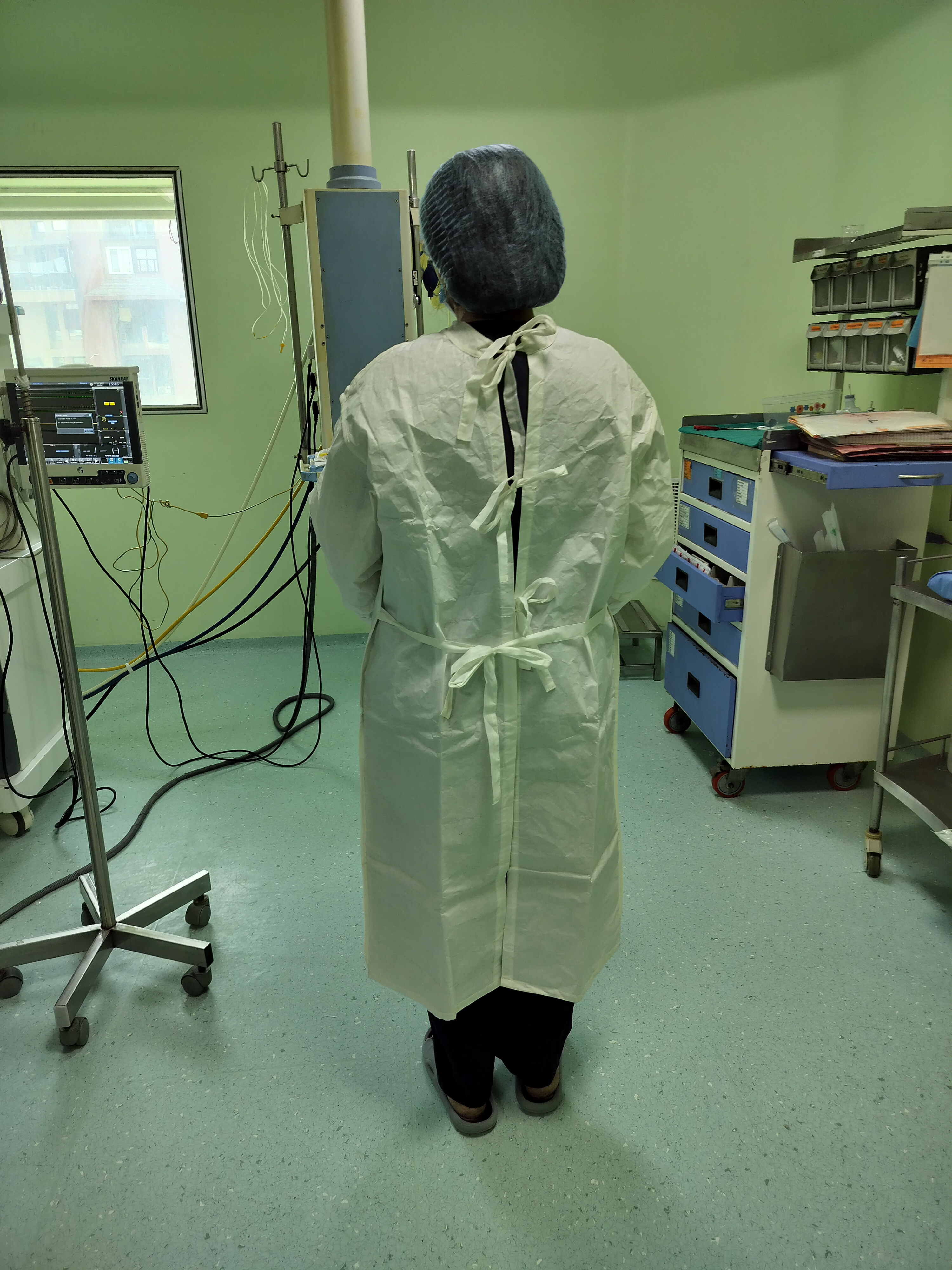
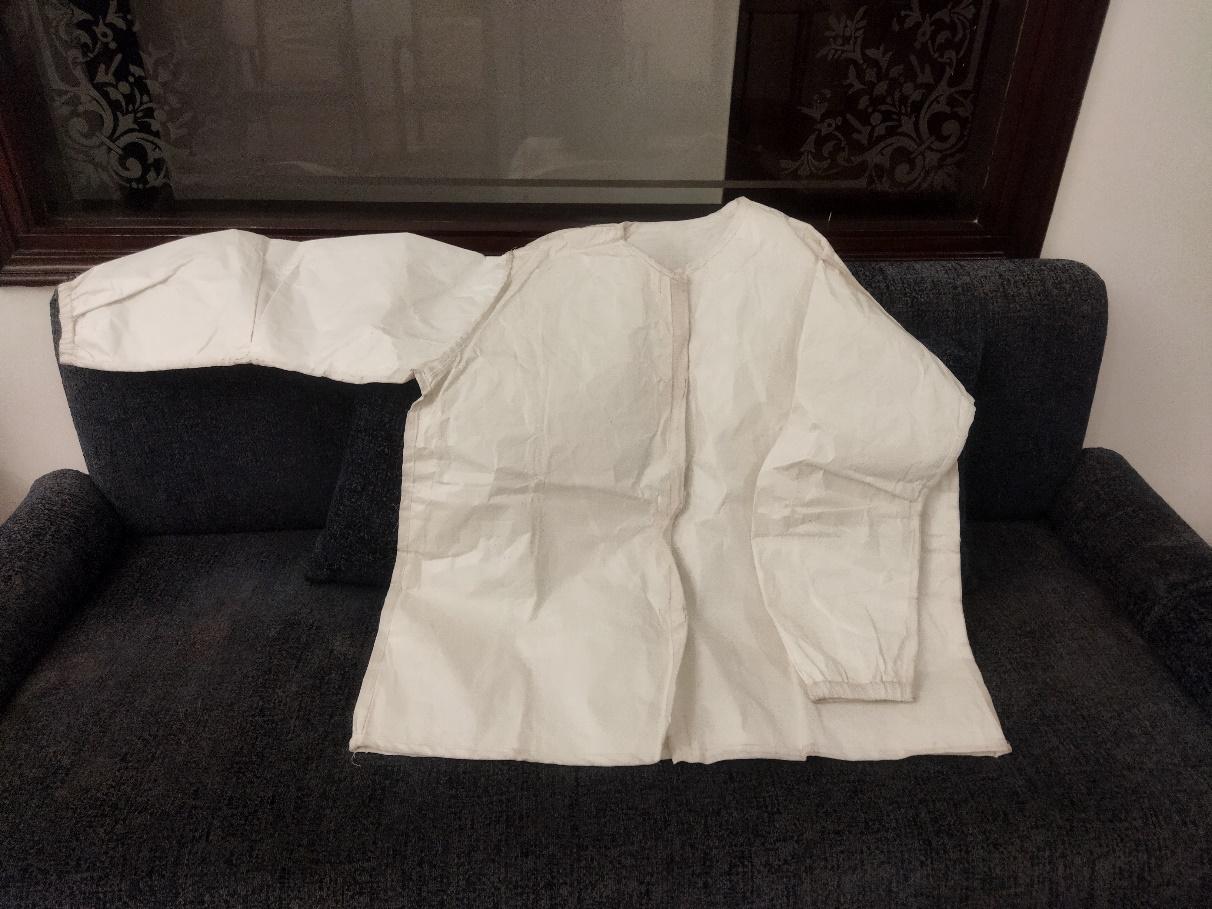
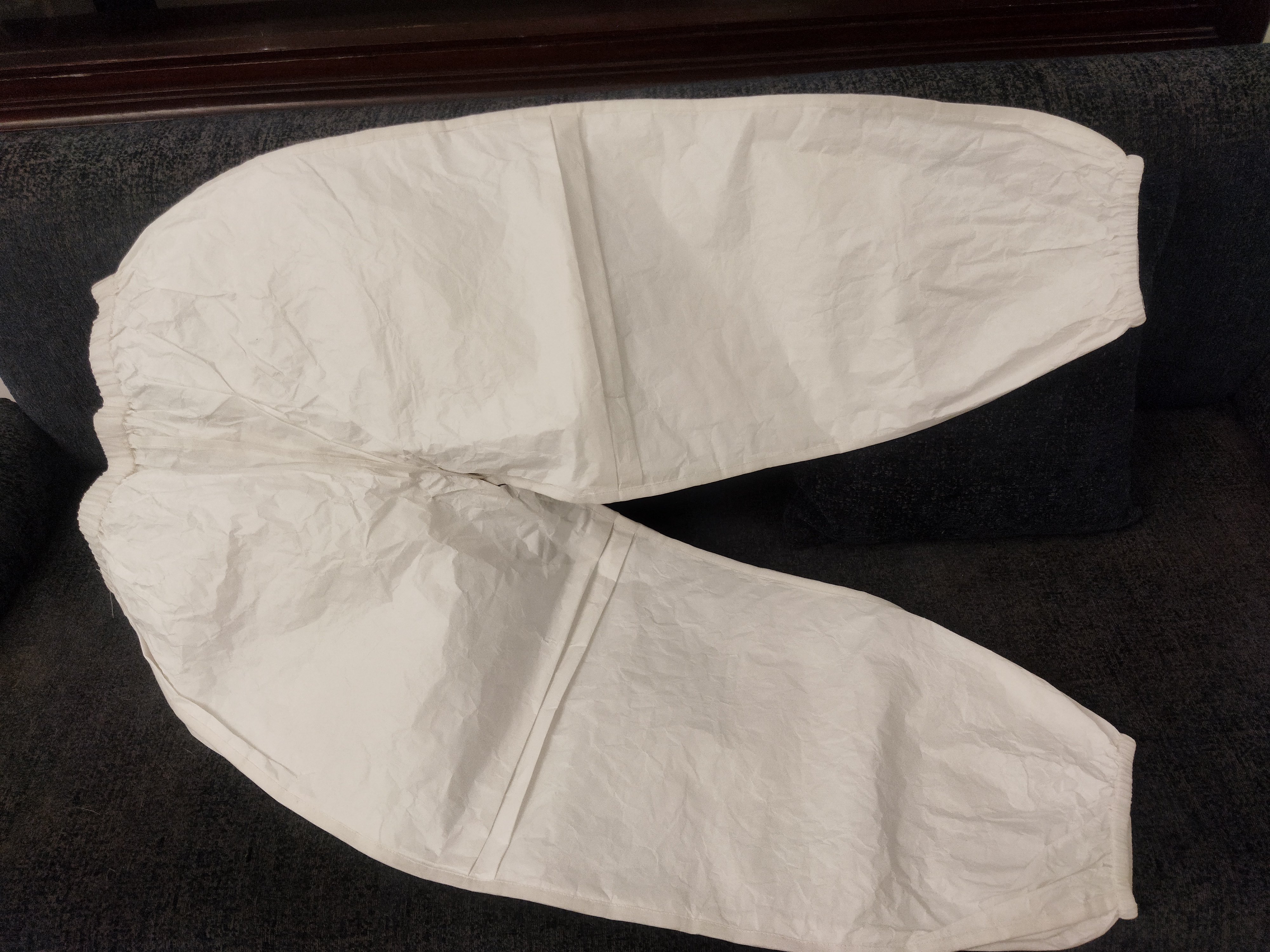
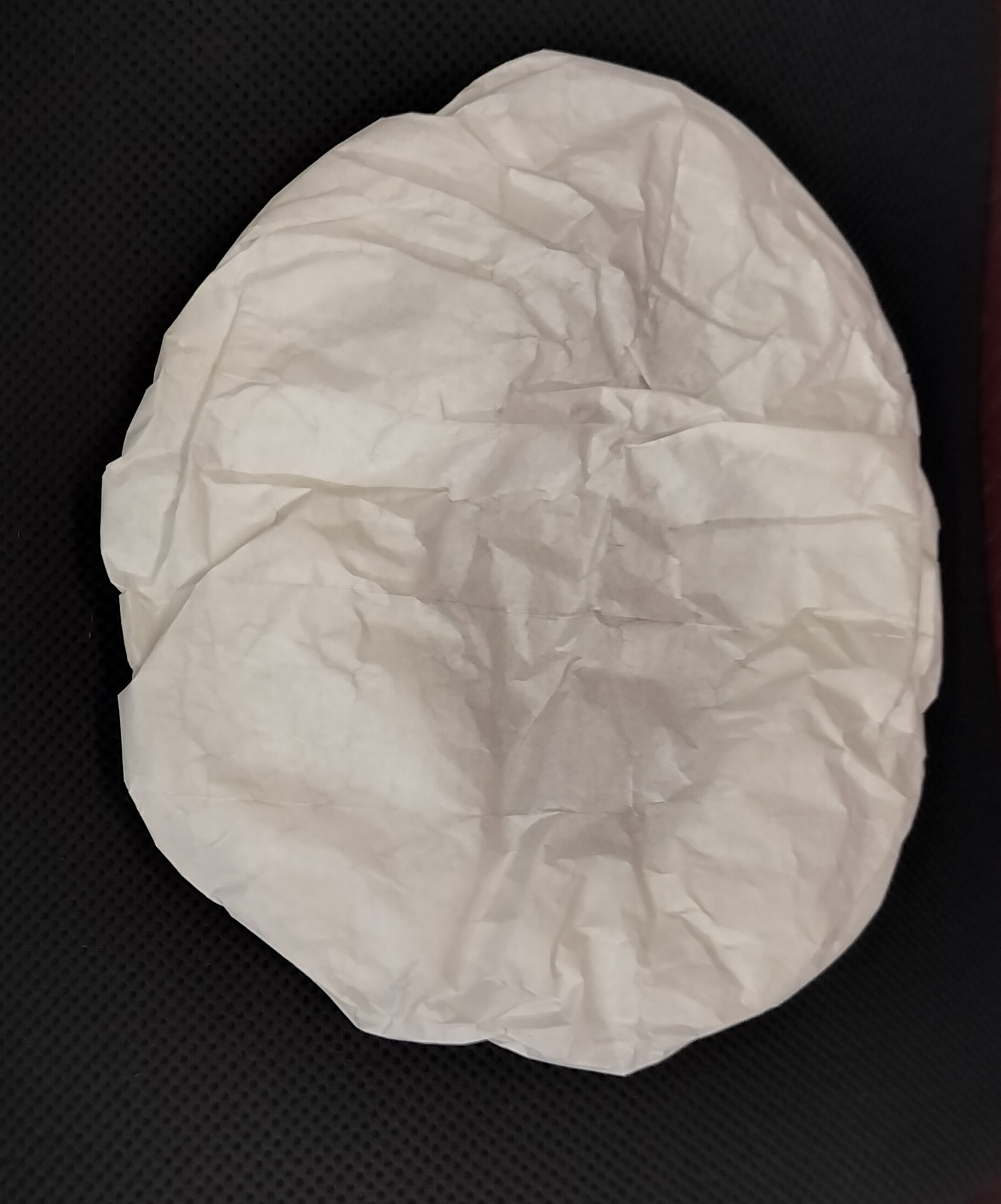
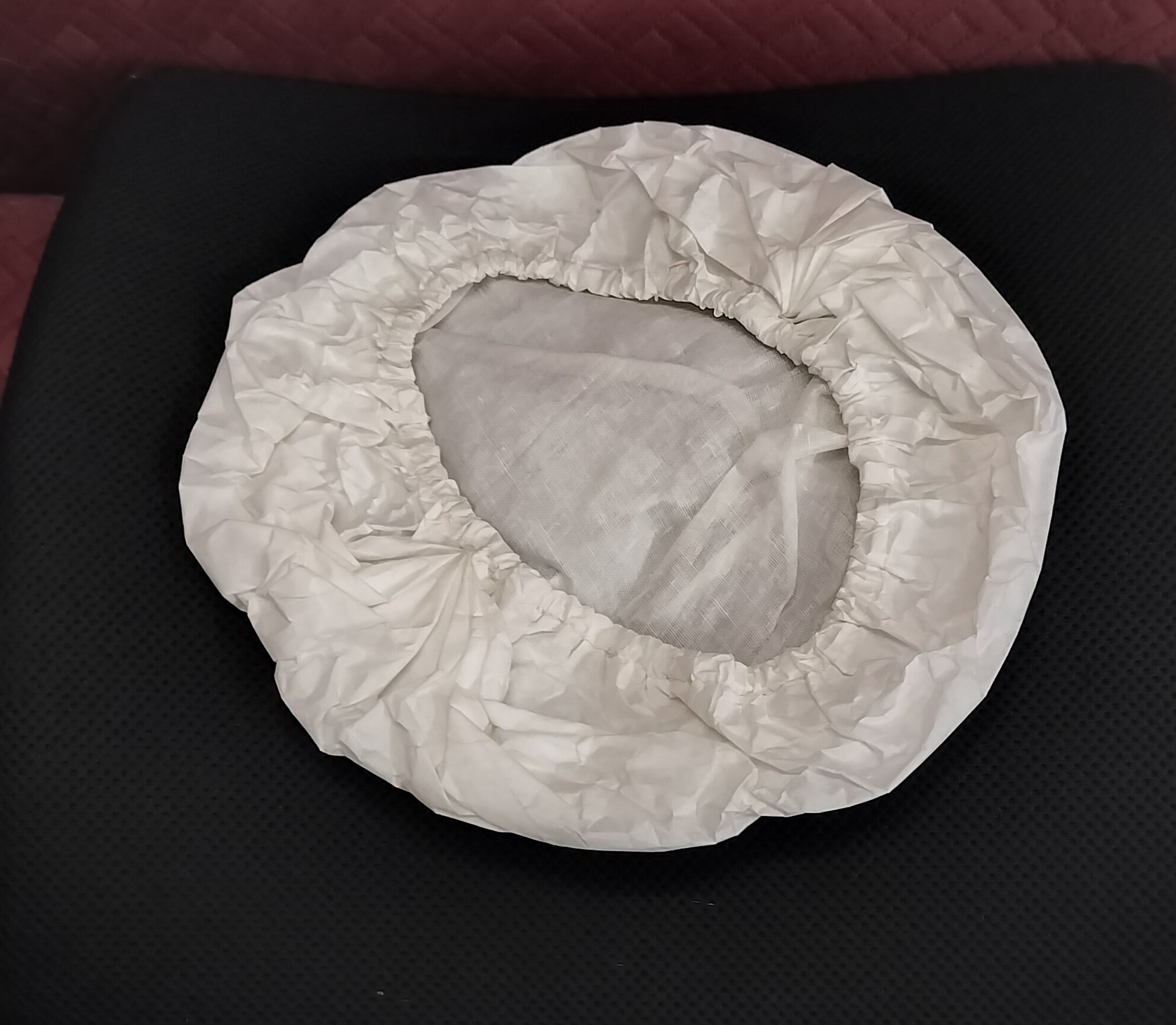
Prototype stage
The innovative solution is a novel, biodegradable, extra safe,
ecologically sustainable personal protective equipment (PPE)
made of soap paper.
Unlike one-piece plastic PPE, it is in two pieces for comfort
of wearing. It consists of a slip-on shirt with an opening at
the back or front, and lower pyjamas with an elastic band to
hold them in place. The wrists and ankles are narrowed with
Velcro fastenings for a snugger fit.
The idea came from the soap booklets used by travellers, which
consist of leaflets of fine paper coated with soap on both
sides — a leaf is plucked out and rubbed with water to
generate a lather.
The prototype underwent several modifications in thickness,
coating, viscosity, and more. The objective was a durable
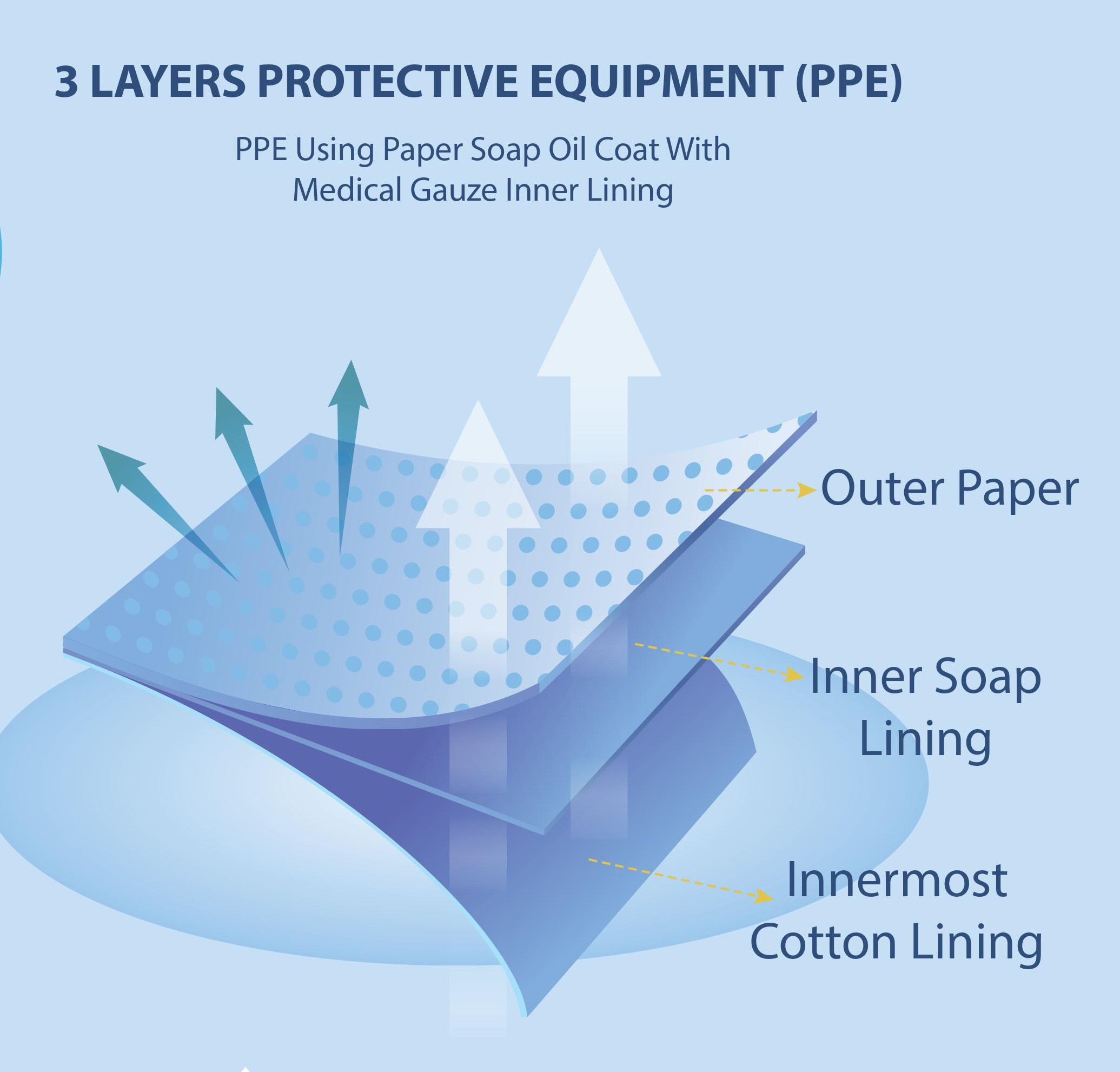
material that could be stitched and seam-sealed. The latest
prototype has three layers — a paper layer coated with soap on
the inside, and a gauze lining inside.
The material can be sterilized with ETO and passed the safety
standards for plastic PPE when tested in government-accredited
laboratories.
Clinically informed
There are tremendous advantages to a PPE kit made of soap
paper rather than plastic. The most important is that it is
ecologically sustainable, as it is highly biodegradable —
paper degrades in 30–90 days, as opposed to plastics, which
are non-biodegradable and weather into microplastics that
permeate the environment.
Plastics are also derived from fossil fuels, a non-renewable
resource whose use accelerates climate change. Our soap paper
instead uses coconut oil as a primary raw material (soap comes
from the saponification of this oil) — a widely available and
inexpensive local resource.
For the wearer's safety, our PPE offers two additional
advantages over the physical barrier plastic PPE provides: the
soap layer is actively virucidal, destroying enveloped viruses
on contact, and this protective action is enhanced if the
material is accidentally wetted, through micelle formation.
Many viruses encountered medically — including the virus
causing Covid-19, Hepatitis C, and HIV — are enveloped viruses,
and are therefore susceptible to soap.
Several antiviral coatings are being developed for nanofibers,
using molecules such as PHMB and polymyxin, or elements such
as silver, copper, and zinc nano-oxide. A soap film provides
an effective antiviral solution at low cost, without any of
this complex technology.
On disposal, a carelessly discarded plastic PPE kit can
transmit viruses, which can survive 72 hours on a plastic
surface. A carelessly disposed soap PPE kit still carries a
germicidal soap coating, and is biodegradable besides.
The carbon footprint of one plastic PPE kit is 905gms CO2e; a
soap paper PPE's footprint would be far lower, as its raw
materials are natural, locally available, and low cost — which
also means the soap paper PPE should be priced well below
quality plastic PPE. No chemicals are used in processing, and
coconut oil, the raw material soap is derived from, is known
to be very skin-friendly.
Sustainability focused
The expected outcome of the project is the establishment of a
manufacturing and research unit that produces biodegradable
PPE for hospital and non-hospital use — contributing to the
enormous problem of plastic waste by providing useful
biodegradable alternatives.
Research into additional uses for the material, such as
packaging and sheets, will build awareness of manufacturing
alternatives and further substitute for plastic.
Establishing a low-carbon-footprint, ecologically sustainable
production process will help create green manufacturing
models that other businesses can follow.
We also want to use this opportunity to spread awareness about
environmental issues — for instance, by attaching an
information card with every item we sell.
The business model will co-opt local vendors and partners,
creating an indigenous network of jobs. Using renewable
resources like coconut oil supports an ecosystem that
nurtures tree planting and the use of natural resources. We
would also set up a recycling plant for biodegradable waste
paper, open to anyone by invitation, to complete the
circularity of our process.
Overall, our efforts aim to make a small but significant
contribution towards mitigating the impact of climate change
and global warming.